We are a Canadian company built around a simple conviction: most environmental damage is a chemistry problem that nobody has read carefully enough. Read it properly at the nanoscale, and solutions open up that looked impossible from a distance.
Royal Sands develops two technologies from that starting point. One grows mining fines into stable, free draining ground. The other brings advanced oxidation and disinfection within reach of communities that have never had a treatment plant. Different problems, one underlying science.
We are technical by design. Our advantage is the ability to look at a stream of water or a deposit of waste and understand what is actually holding it in the state it is in.
The Royal Sands Corporation is 100% owned by Canadian Armed Forces service members.
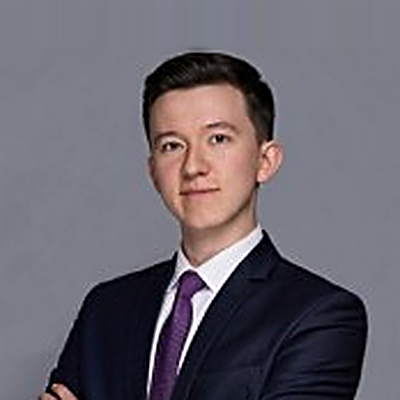
Leads the scientific design behind both Taurus and Aquarius. Nick holds an MSc (Pharmacy and Chemical Engineering) from the University of Waterloo, Canada's technology capital. His background is nanoscale and chemical: how particles behave, why they hold the state they are in, and what it takes to change it. He is a proud Rotarian with the Rotary Club of Waterloo.
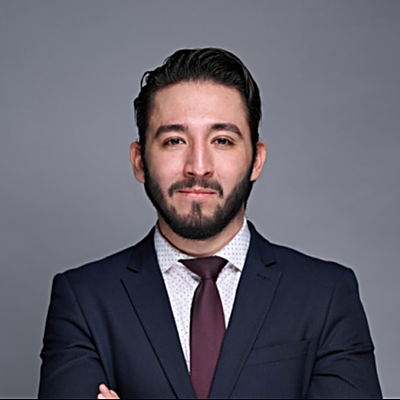
Leads operations, partnerships and strategy. Manuel has built his career running programs in the environmental sector. He is completing an MEng (Water Resources Engineering) at the University of Western Ontario. He turns a challenge into a program with a budget, a schedule and a partner on the other side of it.
Use everything science and technology can offer to return balance to damaged environments.
Not a single method applied everywhere, but the best available answer for each specific place. We want all people to drink clean water and breathe clean air, today and far into the future.
Our two technologies look unrelated until you notice they share a philosophy. Both refuse the shortcut of overwhelming a problem with force, and both work by putting the right structure in place before asking anything of it.
Most environmental treatment tries to push a system somewhere it does not want to go, then spends energy holding it there. We would rather understand why the system sits where it does, change conditions, and help it get to a better place.
Growing mining fines into ground that holds
Clay fines in mining waste stay suspended because each particle carries a like charge, and those charges hold the particles apart. The result is a fluid that behaves like neither a liquid you can treat nor a solid you can walk on.
Industry reaches for long polymer chains that physically bridge particles together. It works beautifully in a jar. The bond is mechanical though, so pumping shear and years of load can pull it apart again, and the deposit reverts.
We collapse the charge barrier first, letting fines gather into open clusters on their own terms. Only then do we introduce mineral reagents that cement those clusters at their contact points. The bond becomes mineral rather than mechanical, and because it forms at the contacts rather than filling the gaps, the structure keeps its drainage paths.
You get strength and drainage at the same time, which are usually in tension. One carbonate route also locks carbon dioxide into the deposit as calcium carbonate, which is a pleasant side effect we are still exploring.
One reagent where a treatment plant will not fit
Conventional drinking water treatment is a sequence of stages: coagulate, settle, filter, disinfect. That sequence assumes infrastructure, a budget and an operator on site, often absent from remote sites and communities.
It oxidises contaminants, coagulates particles and disinfects, all from a single reagent.
Ferrate is difficult to keep stable and transport.
Making ferrate where it is needed, onsite. Independent verification per context, with a range of water chemistry tolerances.
These are the three settings our technology is aimed at.
Decades of fine tailings sit in Alberta ponds, too weak to reclaim and too fluid to leave. It is the largest, best defined version of exactly the problem Taurus was designed around, which makes it the natural first proving ground.
Where we are: bench validation, working toward a field trial with an operating partner.
Forward and northern sites have to handle water and ground contamination without a supply chain behind them. Both of our technologies were built with that constraint in mind, and we think there is a real fit there.
Where we are: early exploration, informed by our own service experience.
Too many communities in Canada live with water they cannot trust, in places where a conventional plant was never realistic. For Aquarius, this is the application that matters most.
Where we are: seeking community partners to co-design the work from the start.